The Agency That Fixed Everything in 1983 Has 847 Employees and a Request for More

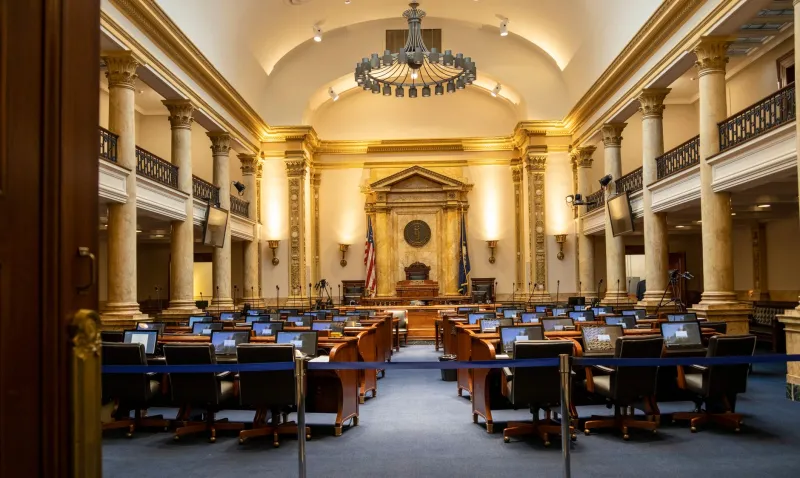
The Federal Office of Petroleum Allocation Stabilization — known internally as FOPAS, and externally as "wait, that still exists?" — celebrated its fiftieth anniversary this month with a modest ceremony in a government conference room that had been booked for the occasion since 2019.
The agency was established by executive order in October 1974 in response to the oil embargo crisis, tasked with coordinating the equitable distribution of petroleum resources across the continental United States. It performed this function with what historians describe as "mixed results" until approximately 1983, at which point the crisis it was created to address had largely resolved itself through a combination of market forces, deregulation, and the passage of time.
FOPAS has not let that stop it.
A Mission Evolves, Slowly, Into Something Unrecognizable
By 1985, with nothing urgent left to stabilize, the agency undertook what its internal records describe as a "strategic mandate recalibration." In practice, this meant converting its petroleum emergency response protocols into a 400-page preparedness framework for petroleum emergencies that had not yet occurred but theoretically could.
The framework was updated in 1991, 1998, 2003, 2009, 2014, and 2019. Each update concluded that the threat of a petroleum allocation crisis remained, in the agency's preferred phrasing, "non-zero."
This is technically accurate. The threat of almost anything is, in a strict probabilistic sense, non-zero. FOPAS has built a $340 million annual budget on this observation.
"The absence of a crisis is not evidence that a crisis cannot occur," said FOPAS Director Margaret Ellison-Howell at a press briefing last Tuesday, speaking from behind a podium bearing the agency's seal — a stylized oil derrick superimposed on a map of the United States, updated in 2017 to include a small recycling symbol for reasons the agency declined to elaborate on. "In many ways, the absence of a crisis is the most dangerous kind of crisis environment."
 Photo: Margaret Ellison-Howell, via cache.marieclaire.fr
Director Ellison-Howell has led FOPAS since 2018. She is the agency's ninth director. The previous eight all left under circumstances the agency describes as "transition."
The Numbers, Which Are Real and Should Alarm Someone
FOPAS currently employs 847 full-time staff across four regional offices in Washington D.C., Houston, Denver, and a building in suburban Maryland that the agency acknowledges it has been trying to vacate since 2011.
Its annual budget in 1974 was $4.2 million. Adjusted for inflation, that figure would be approximately $26 million today. The agency's current budget is $341 million. This represents a real-terms increase of roughly 1,200 percent over a period during which its founding mandate ceased to be relevant.
When asked about this at last year's appropriations hearing, Director Ellison-Howell noted that the agency had issued 214 quarterly reports since 2001, maintained a 24-hour emergency hotline that received an average of three calls per month — "mostly wrong numbers," she acknowledged — and had recently launched a digital preparedness portal that received 400 unique visitors in its first year, 312 of whom were FOPAS employees.
"We are doing the work," she said.
Senator Dale Winthrop of Ohio, who chairs the relevant subcommittee, nodded and moved on to the next item.
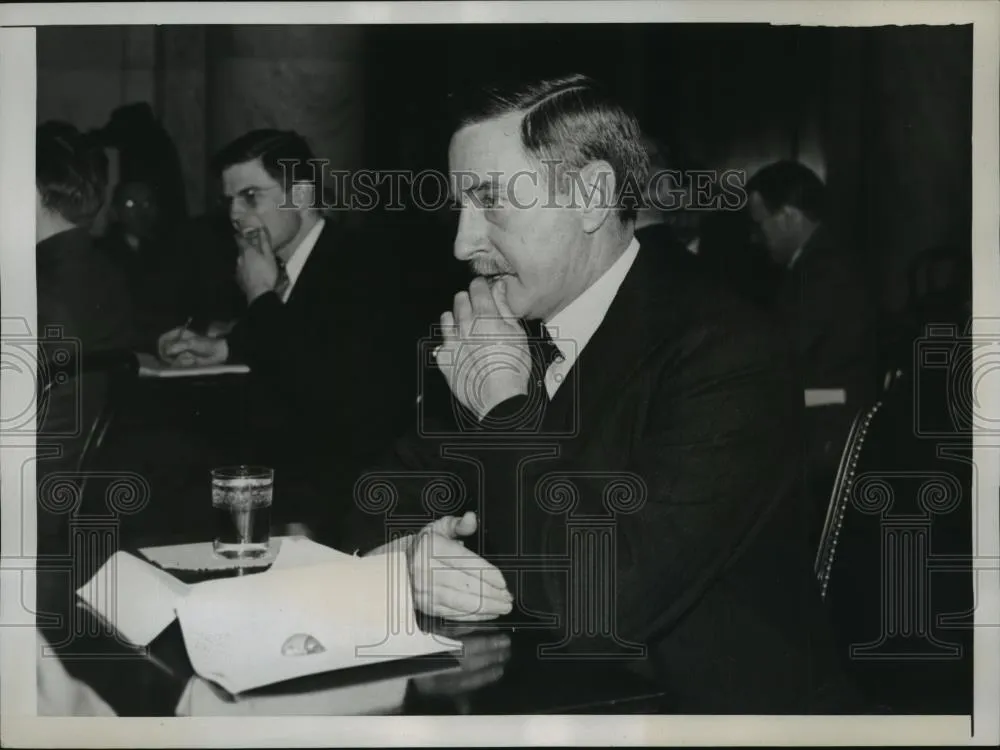 Photo: Senator Dale Winthrop, via historicimages.com
The Documentation of Potential Problems Is Itself Now a Problem
Perhaps FOPAS's most remarkable achievement in the post-crisis era has been the sheer volume of material it has produced to justify its own existence. The agency's internal archive now contains over 40,000 documents, including 2,300 classified as "critical readiness assessments," 847 filed under "emerging threat scenarios," and one labeled "Miscellaneous — Do Not Open" that has apparently been in the archive since 1979 and which no current employee has clearance to access.
The agency's flagship product is the Annual Petroleum Vulnerability Index, a 600-page report released each spring that ranks U.S. vulnerability to a petroleum allocation crisis on a scale of one to ten. The index has never scored below 6.2. It has never scored above 6.8. It has been produced every year since 1986 at a cost of approximately $2.1 million per edition.
"The consistency of the index is itself meaningful data," said Dr. Frederick Lamb, FOPAS's Chief Analytical Officer, who joined the agency in 1991 and has written or co-written 31 of the 38 published editions. "It tells us that the threat environment is stable, which is another way of saying it has not gone away."
Experts outside the agency offered a different interpretation. "It tells you that someone has been writing the same report for 38 years," said Dr. Caroline Marsh, an energy policy researcher at Georgetown who has studied federal agency persistence. "Which is impressive in its own way, I suppose."
The Anniversary Celebration Was Appropriately Funded
The fiftieth anniversary event, held on a Thursday afternoon, featured remarks from Director Ellison-Howell, a video tribute narrated by a voice actor doing an impression of authority, and a commemorative booklet printed in a quantity of 900 — one for each employee, plus 53 for stakeholder distribution.
The booklet opens with a timeline of the agency's history that devotes four pages to 1974 through 1983 and thirty-one pages to 1983 through the present. The final page contains a quote attributed to the agency's founding director: "Preparedness is not a moment. It is a posture."
The founding director, reached by phone at his home in Scottsdale, Arizona, said he had no memory of saying this.
A congressional hearing on FOPAS's budget request — which seeks a 12 percent increase for fiscal year 2026, to fund what the agency describes as a "next-generation readiness architecture" — is scheduled for next month. The subcommittee has allotted 45 minutes.
Nobody is expected to ask why the agency exists.
The agency, for its part, has prepared 200 pages of testimony explaining what it would do if someone did.