Lobbying Industry Kindly Volunteers to Fix Lobbying Industry, Reports Everything Going Great
WASHINGTON, D.C. — When Senator Patricia Holloway of Ohio introduced the Restoring Public Trust in Government Ethics Act last spring, she described it as a once-in-a-generation opportunity to rein in the influence of special interests on federal policymaking. Fourteen months later, the bill has been amended 63 times, expanded from 31 pages to 412, and is now widely regarded by the lobbying community as one of the most professionally satisfying pieces of legislation they have ever had the privilege of writing.
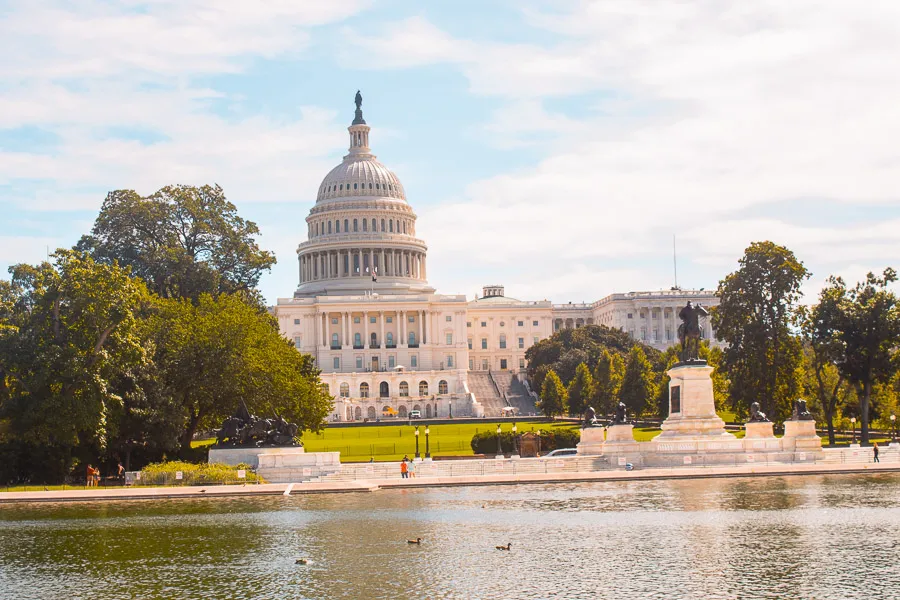 Photo: WASHINGTON, D.C., via fernwehrahee.com
 Photo: Senator Patricia Holloway, via www.mgmanitoba.com
"We're incredibly proud of what this bill has become," said Marcus Delray, Senior Managing Director of Delray, Finch & Associates, one of seven lobbying firms retained to advise on the legislation's drafting. "Senator Holloway had a vision. We just helped give it structure, language, scope, and ultimately a completely different purpose."
The Bill's Journey from Threat to Opportunity
The Restoring Public Trust Act began as a straightforward proposal: mandatory disclosure of lobbying contacts, a five-year cooling-off period for former officials entering the influence industry, and a cap on the size of gifts that could be offered to congressional staffers.
By the time the bill emerged from the Senate Rules Committee in March, the cooling-off period had been reduced to eighteen months with seventeen enumerated exceptions, gift limits had been replaced with a voluntary reporting framework, and disclosure requirements now applied exclusively to lobbyists who had registered under a specific 1996 provision that most modern firms had long since restructured to avoid.
A new section — Section 14(c), Subsection 7, Paragraph ii — created a formal role for "government relations professionals" in advising future ethics legislation, effectively institutionalizing the arrangement that had produced the current bill.
"We think of it as a feedback loop," said Delray. "The industry knows the industry. It would be strange not to involve us."
Conflict of Interest Experts Find No Conflicts of Interest
To assess whether the process had been appropriate, this publication consulted the Institute for Transparent Governance and Civic Accountability, a Washington think tank that has published extensively on lobbying reform.
The Institute's 2024 Annual Report lists among its "strategic partners" fourteen of the twenty largest lobbying firms in the country, a detail its communications director described as "context, not conflict."
"Our research is completely independent," said Dr. Felicia Huang, the Institute's Director of Ethics Policy. "The fact that we are funded by the very industry we study simply means we have excellent access to primary sources. This is considered a methodological strength."
 Photo: Dr. Felicia Huang, via painhero.ca
Dr. Huang's team reviewed the bill's evolution and released a twelve-page summary concluding that the legislative process had been "robust, inclusive, and a model for future reform efforts." The summary did not mention that three of the Institute's board members had billed a combined $4.2 million in consulting fees to firms involved in the bill's drafting, a fact that was, however, disclosed on page 9 of the full 200-page report that accompanied the summary.
"We disclosed it," Dr. Huang noted. "That's the transparency."
Quotes From Officials Who Are Very Proud
At a press conference Tuesday, Senator Holloway stood beside representatives from three of the firms that had shaped the final text and described the bill as "a testament to what Washington can achieve when everyone comes to the table."
When a reporter asked whether it was unusual for the regulated industry to write the regulation, the Senator paused for approximately four seconds before confirming that the process had been "collaborative."
Robert Finch, co-founder of Delray, Finch & Associates, offered a more expansive answer.
"Look, you can have reform that sounds good in a press release, or you can have reform that actually works within the existing ecosystem," he said. "We chose the latter. The former is poetry. The latter is governance."
Finch later clarified that by "works within the existing ecosystem," he meant that his firm's annual revenue projections remained unchanged.
What the Bill Actually Does
Legal analysts who reviewed the final text have identified several provisions that, while framed as restrictions, function in practice as expansions of permissible lobbying activity.
Section 7 of the bill, titled "Enhanced Accountability Measures," requires all registered lobbyists to file a new quarterly disclosure form. The form, however, asks only for information already required under existing law, formatted differently. The section's primary effect, analysts note, is to create a new compliance consulting market — a gap already being filled by several firms, including two that helped draft Section 7.
Section 22 establishes the Office of Ethics Coordination, a new federal body charged with overseeing lobbying disclosures. The Office's inaugural advisory board, announced the same day as the press conference, includes four former lobbyists, a current lobbyist on a temporary leave of absence, and Dr. Felicia Huang.
"We're thrilled to be part of the solution," Dr. Huang said.
A Deadpan Assessment of Where Things Stand
The Restoring Public Trust in Government Ethics Act is expected to pass the Senate by a comfortable margin. A companion bill in the House has already attracted 38 co-sponsors, six of whom have received campaign contributions from firms involved in the legislation's drafting, a coincidence that their offices described, when contacted, as "not something we're going to comment on."
Senator Holloway has announced that once the bill is signed into law, she intends to convene a bipartisan working group to evaluate its implementation — a working group whose membership, her office confirmed, would be drawn from "stakeholders with deep expertise in the field."
Marcus Delray said his firm would be happy to help.
"We're very committed to this space," he said. "Always have been. That's not going to change."
Exerts say this is fine. The bill is 412 pages. Nobody is reading it.