Senate Hopeful's Barnstorming Campaign to Solve Problem Quietly Solved During the Bush Administration Is Working Perfectly
Photo: Gerald Shields, CC BY-SA 4.0, via Wikimedia Commons
Senate Hopeful's Barnstorming Campaign to Solve Problem Quietly Solved During the Bush Administration Is Working Perfectly
NASHVILLE, TENN. — Congressman Dale Merritt has been running for Senate for eleven months on a single, driving promise: to fix America's rural broadband permitting bottleneck, a labyrinthine federal process he describes as "the single greatest obstacle to economic opportunity in the American heartland" and which has anchored every speech, every ad, and every handshake he has offered on the campaign trail.
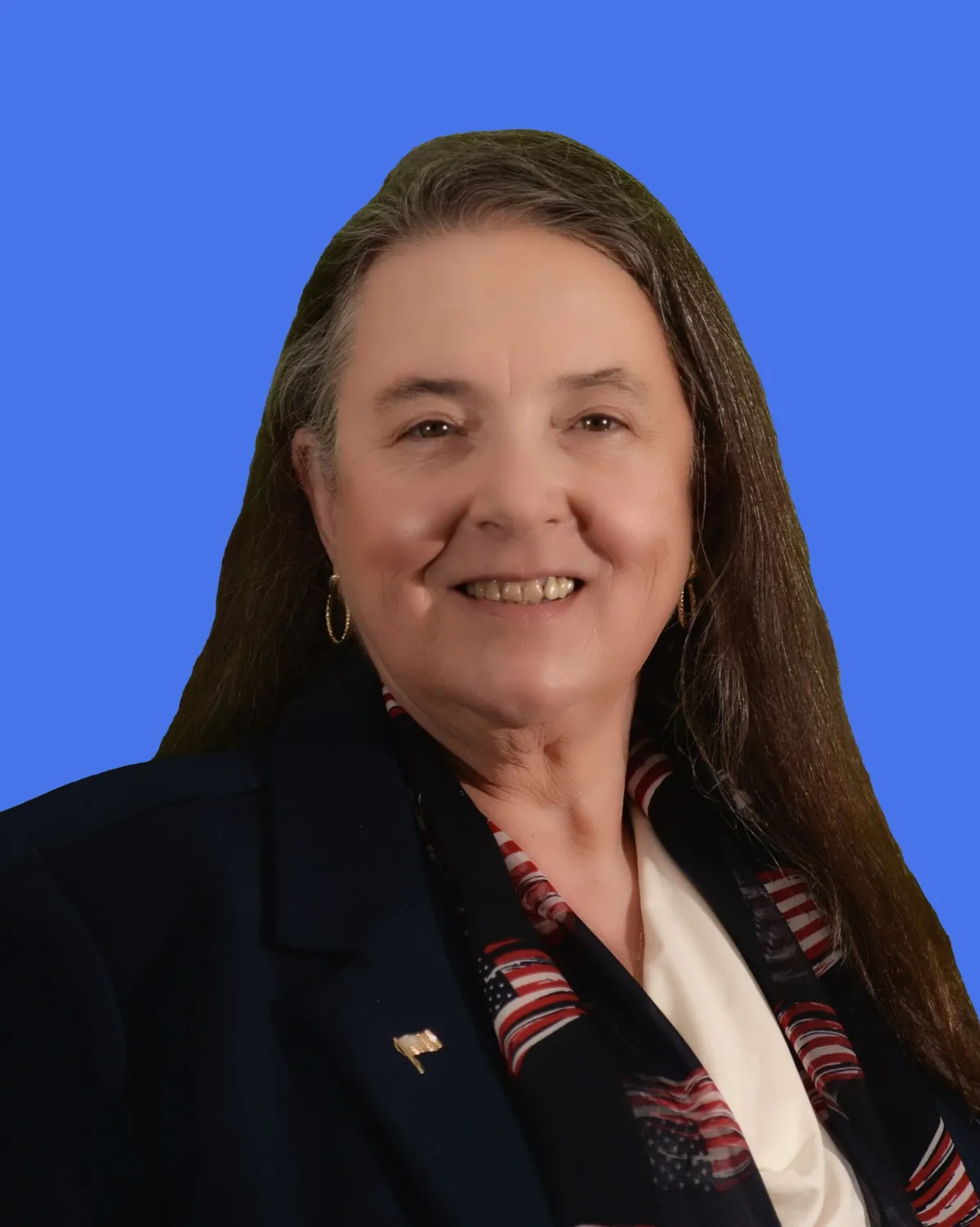 Photo: Congressman Dale Merritt, via www.voterfocus.com
The Rural Broadband Infrastructure Streamlining Act of 2003, signed into law by President George W. Bush on March 7th of that year, resolved the permitting bottleneck in question. The legislation passed 94-3 in the Senate and 387-41 in the House. A subsequent 2009 expansion strengthened its provisions. The problem Congressman Merritt has built his entire political identity around solving has not legally existed for twenty-one years.
He is twelve points ahead.
The Discovery
According to three sources familiar with the campaign's internal operations, the discrepancy was identified on October 3rd by a junior research analyst named Tyler, who was preparing talking points for a debate and cross-referenced the campaign's core policy platform against federal legislative records for the first time.
Tyler brought his findings to the campaign's policy director, who brought them to the communications director, who brought them to the campaign manager, a veteran operative named Sandra Howell who has run eleven Senate campaigns and won nine of them.
Howell reviewed the documentation for approximately four minutes. She then asked whether the polling had changed. It had not. She told everyone in the room that this conversation had not happened, asked Tyler if he wanted to transfer to the digital advertising team, and scheduled a rally in Knoxville for the following Friday.
"We're very focused on the issues that matter to Tennessee families," Howell said, when contacted by this publication. She did not elaborate on which issues those were.
Tyler is now running the campaign's Instagram.
The Stump Speech
Congressman Merritt's standard rally address runs approximately 45 minutes and devotes roughly 18 of those minutes to the broadband permitting crisis. He is, by most accounts, exceptionally good at describing it.
"Right now, today, a small business owner in Hardin County who wants to expand her operation cannot get a reliable internet connection because Washington's broken permitting system is standing in her way," he told a crowd of approximately 400 people in Cookeville last Tuesday, to sustained applause. "The bureaucrats, the red tape, the endless forms — I have seen it. I have heard from your neighbors. And when I get to Washington, I am going to fix it."
The crowd cheered. Three people in the front row held signs reading "MERRITT: BROADBAND NOW."
The small business owner in Hardin County, reached separately, said her internet connection was fine and had been for years, but that she appreciated someone caring.
"He seems passionate," she said. "That counts for something."
The Fact-Checker
Michelle Okafor has been a political fact-checker for eleven years. She has evaluated claims from candidates across seven states, four presidential campaigns, and two recall elections. She reviewed Congressman Merritt's broadband platform in September and published a piece rating his central claim "False" with a detailed explanation of the 2003 legislation.
The piece received approximately 900 views. The campaign's latest ad, which aired during NFL coverage and features Merritt walking through a field while a narrator says "Washington hasn't fixed this yet," has been seen by an estimated 2.3 million people.
"I rated it False. I explained the statute. I cited the congressional record," Okafor said. "His polling went up four points the week it published. I don't think it's related. I also don't think anything I do is related to anything anymore. I'm fine. I've made peace with it."
She has since fact-checked two of Merritt's other claims. One concerned a trade agreement that was renegotiated in 2018. The other referenced a tax provision that expired during the Clinton administration. Both were rated False. Both generated less traffic than a piece she wrote in 2022 about a congressman who mispronounced "epitome."
"The epitome piece got 40,000 shares," Okafor said. She stared at the middle distance for a moment. "People really cared about the epitome thing."
The Opponent
Merritt's opponent, incumbent Senator James Carver, has attempted on three separate occasions to point out during debates that the permitting issue was resolved two decades ago. Each time, Merritt has responded by accusing Carver of being "exactly the kind of Washington insider who thinks the problem is solved when the problem is not solved," a line that has been focus-grouped extensively and tests extremely well with voters aged 45 to 65.
Carver's campaign released a fact sheet in October titled "The 2003 Act: What It Did and Why This Matters." It was four pages long, included a chart, and was downloaded 214 times, 80 of which were from within the Carver campaign's own offices.
"I don't know what else to do," Senator Carver told a fundraiser in Memphis, in remarks that were not intended to be public but were recorded by a journalist who was standing nearby. "I passed a law. The law worked. And now I'm losing to a man whose entire campaign is that I didn't pass the law."
He is currently nine points behind.
The Announcement
At a press conference Thursday, Congressman Merritt announced the formation of the Merritt Commission on Rural Connectivity, a bipartisan working group that, if elected, he will convene within his first 100 days to study the broadband permitting issue and develop a legislative framework for addressing it.
The working group will include three former senators, two technology industry representatives, and a rural economic development specialist. It will have a 90-day mandate and report back to Congress with recommendations.
When a reporter asked whether the Commission was aware of the 2003 legislation, Merritt said he was glad the reporter had raised the issue of Washington's broken permitting process and that it was exactly why he was running.
Sandra Howell, standing to the side, checked her phone. The polling had not changed.
"We're going to fix this," Merritt said, to applause. "Together."
The Commission is expected to release its findings in late 2026. Its recommendations will then be reviewed by a congressional subcommittee, which will determine whether to form a task force to evaluate whether legislation is warranted. Experts say the process should take approximately two to four years, at which point the findings will be largely consistent with the Rural Broadband Infrastructure Streamlining Act of 2003.
Tyler, reached on Instagram, declined to comment.