Breakthrough in Bureaucratic Innovation
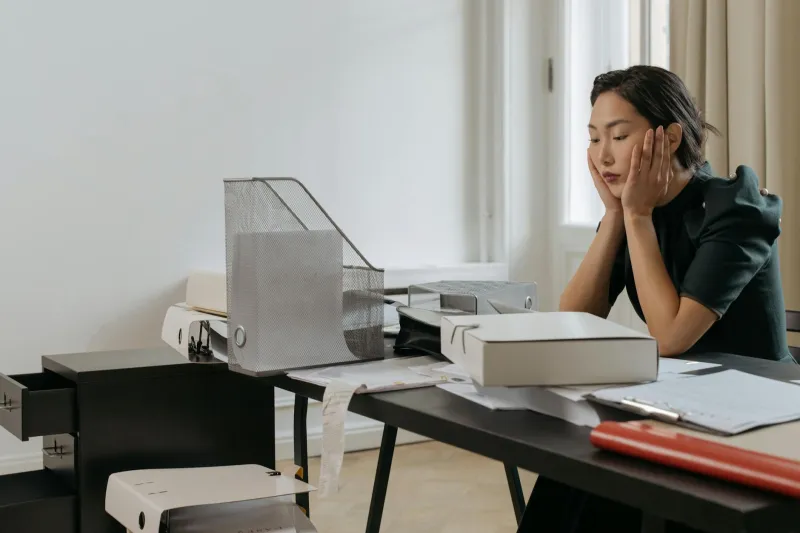
The federal government's ambitious Digital First Initiative reached a historic milestone this week with the launch of USA.gov 3.0, a revolutionary online platform that has successfully digitized the complete experience of waiting in government offices while adding several cutting-edge technological barriers that were previously impossible to implement in physical spaces.
"We've fundamentally transformed how Americans interact with their government," announced Digital Transformation Secretary Dr. Patricia Hendricks at a press conference held via a video call that disconnected seventeen times. "Citizens can now experience all the confusion and delays of traditional bureaucracy without ever leaving their homes, plus we've introduced exciting new forms of digital frustration that weren't available in the analog era."
 Photo: Dr. Patricia Hendricks, via alchetron.com
The platform, developed over six years at a cost of $127 million, represents the culmination of the government's commitment to making public services more accessible by making them equally inaccessible to everyone.
User Experience Excellence
Early user testing reveals that the platform has achieved remarkable fidelity in recreating the authentic government service experience. Citizens report that the digital waiting room successfully captures the essence of sitting in uncomfortable chairs while holding a numbered ticket, complete with a virtual queue that moves backward approximately every thirty minutes.
"The attention to detail is extraordinary," noted beta tester Jennifer Morrison, who spent four hours attempting to renew her passport online. "Just when I thought I was making progress, the system logged me out and informed me that my session had expired due to inactivity, even though I'd been actively clicking the 'I'm still here' button every sixty seconds as instructed."
 Photo: Jennifer Morrison, via celebmafia.com
The platform's crown jewel is its innovative PDF integration system, which allows users to download forms that must be printed, filled out by hand, scanned, and uploaded as image files that the system cannot read. Users who lack access to printers are helpfully directed to a list of 47 approved printing locations, most of which closed in 2019.
Cutting-Edge Security Features
The portal incorporates state-of-the-art security measures designed to protect citizen data while ensuring that citizens cannot actually access their own information. The multi-factor authentication system requires users to verify their identity through six different methods, including a security question about their first pet's maternal grandmother's maiden name.
"Security is our top priority," explained Chief Technology Officer Marcus Chen, speaking from his home office after being locked out of his own government account. "We've implemented so many layers of protection that unauthorized users have virtually no chance of accessing the system, and authorized users have only slightly better odds."
 Photo: Marcus Chen, via lawinamin.com
The platform's password requirements represent a particular innovation in user security, mandating credentials that include at least 14 characters, two ancient Greek letters, one extinct emoji, and a symbol that exists only on keyboards manufactured between 1987 and 1991.
Seamless Integration Achievements
The new platform seamlessly integrates with all existing government databases by requiring users to manually enter the same information into seventeen different forms, each of which validates the data against different standards. The system helpfully flags inconsistencies, such as when users spell their own names identically across multiple forms.
"Integration was one of our biggest challenges," noted Project Manager Dr. Rebecca Sterling. "We solved it by creating a unified interface that connects to nothing, ensuring consistent inconsistency across all government services."
Users particularly appreciate the platform's innovative approach to file uploads, which accepts documents in 23 different formats but can only process files saved in a proprietary format available exclusively through software that was discontinued in 2018.
Customer Service Revolution
The platform's customer support system represents a quantum leap forward in automated assistance technology. The AI-powered help chatbot, trained on thousands of government manuals, provides responses that are simultaneously comprehensive and completely unrelated to user questions.
"Our virtual assistant can generate detailed explanations about any topic except the one you're asking about," proudly explained Customer Experience Director Dr. Amanda Martinez. "It's like having a real government employee available 24/7, in that it's very enthusiastic about helping you with something other than what you need."
Users who require human assistance can schedule a callback through the platform's innovative appointment system, which offers available time slots in February 2027.
Mobile Optimization Success
The platform's mobile interface demonstrates the government's commitment to modern user experience design by requiring users to rotate their phones 47 times during each session to accommodate forms that were optimized for desktop computers from 2003.
"We've created a truly responsive design," noted Lead Developer Sarah Kim. "The platform responds to every device by displaying error messages in the appropriate screen resolution."
The mobile app, available for download through a QR code that can only be scanned using a specific model of scanner that must be purchased separately, has achieved a perfect one-star rating in both app stores.
Environmental Impact
The Digital First Initiative has achieved significant environmental benefits by eliminating the need for citizens to drive to government offices. Instead, users can now waste time and resources from home while printing dozens of forms that must be mailed to processing centers where they will be scanned back into digital format.
"We've reduced our carbon footprint by transferring it entirely to our users," explained Sustainability Coordinator Dr. Michael Rodriguez. "Citizens now burn their own printer ink and gasoline driving to FedEx locations, which is much more efficient than having them drive to our offices."
Future Enhancements
The Department of Digital Transformation has announced plans for USA.gov 4.0, which will introduce virtual reality capabilities allowing users to experience the full sensory environment of government waiting rooms, including fluorescent lighting and the sound of dot matrix printers.
"We're committed to continuous improvement," concluded Secretary Hendricks. "Our goal is to ensure that interacting with government online is just as frustrating as doing it in person, but with the added convenience of being able to experience that frustration while wearing pajamas."
Seven new consulting firms specializing in digital bureaucracy optimization launched this morning, each offering to help other government agencies achieve similar levels of user-friendly inefficiency.