Historic Legislation Creates Framework for Eventually Considering Whether to Address the Thing Everyone Forgot About
Congress Solves the Process Problem by Creating More Process
In a triumphant display of legislative efficiency that has taken only eighteen months of committee hearings, subcommittee markups, and inter-committee coordination meetings, Congress has successfully introduced the Procedural Reform Acceleration and Coordination to Improve Coordination Act (PRACICA), a groundbreaking piece of legislation designed to fix the process for fixing the process for fixing broken processes.
The 2,847-page bill, which establishes a framework for creating frameworks that will eventually framework other frameworks, has been hailed by its sponsors as "exactly the kind of decisive action Americans expect from their government."
"Today marks a historic moment in American governance," declared Representative Sarah Mitchell (D-Oregon), the bill's primary sponsor, during yesterday's press conference. "For too long, we've struggled with broken processes that prevent us from fixing our broken processes. This legislation creates a clear pathway forward to someday having a clear pathway forward."
 Photo: Representative Sarah Mitchell, via yt3.googleusercontent.com
The Architecture of Administrative Innovation
At its core, PRACICA establishes the Interagency Task Force for Process Improvement Process Improvement (ITFPIPI), a 47-member body comprising representatives from every federal department, agency, bureau, office, and the mailroom of the Government Accountability Office. The task force will be empowered to meet quarterly to discuss the possibility of forming working groups that could potentially recommend the creation of subcommittees.
"What we've done here is revolutionary," explained Representative James Crawford (R-Texas), the bill's co-sponsor. "Instead of just creating another committee to study the problem, we've created a task force to study whether we should create a committee to study the problem. That's next-level thinking."
The legislation includes several innovative features, including a sunset clause that automatically extends itself, a built-in review process that reviews the review process, and what drafters call a "meta-accountability framework" that holds accountable the people responsible for holding people accountable for accountability.
Stakeholder Engagement and Coordination Coordination
Perhaps the most ambitious aspect of PRACICA is its comprehensive stakeholder engagement protocol, which requires the task force to consult with "all relevant parties, including parties not yet determined to be relevant, parties whose relevance is under review, and parties responsible for determining party relevance."
"We've learned from past mistakes," noted Senator Patricia Blackwood (D-Vermont), chair of the Senate Subcommittee on Process Improvement Oversight. "Previous reform efforts failed because they didn't adequately coordinate their coordination efforts. This bill creates a Coordination Coordination Office specifically tasked with coordinating the coordination of coordination activities."
 Photo: Senator Patricia Blackwood, via www.socialdemocrats.ie
The Coordination Coordination Office will report to the Deputy Assistant Director for Coordination Affairs, a new position that will oversee coordination between the various coordination entities while coordinating with the Interagency Coordination Council on matters requiring coordinated coordination.
Implementation Timeline: A Study in Efficiency
The legislation includes a carefully crafted implementation schedule designed to maximize both urgency and deliberation. Phase One, scheduled to begin "no later than 180 days after the completion of the preliminary planning phase," will focus on establishing the basic framework for eventually establishing the basic framework.
Phase Two, tentatively scheduled for sometime after Phase One, will involve what legislators describe as "intensive stakeholder consultation," which includes forming focus groups to determine who should be in the focus groups that will identify the stakeholders who need to be consulted.
"We're not rushing into this," emphasized Senator Crawford. "Good governance requires careful consideration, and careful consideration requires careful consideration of what needs to be carefully considered. That's why Phase Three won't begin until we've completed a comprehensive review of whether Phase Two accomplished what Phase One was supposed to determine Phase Two should accomplish."
Expert Analysis: Progress or Performance Art?
The legislation has generated intense debate among government efficiency experts, who cannot agree on whether PRACICA represents revolutionary progress, a significant step backward, or an elaborate form of bureaucratic interpretive dance.
"This is either the most sophisticated approach to process reform in American history, or the most expensive joke ever played on the taxpayers," said Dr. Michael Harrison of the Institute for Government Effectiveness. "Possibly both. The beauty is that we won't know which until the task force completes its preliminary assessment of whether it's equipped to make that determination."
Dr. Lisa Chen of the Brookings Institution offered a more optimistic assessment: "What critics fail to understand is that this legislation doesn't just create processes – it creates meta-processes. It's not just reform; it's reform squared. Or possibly reform cubed. We'll need to form a working group to figure out the exact mathematical relationship."
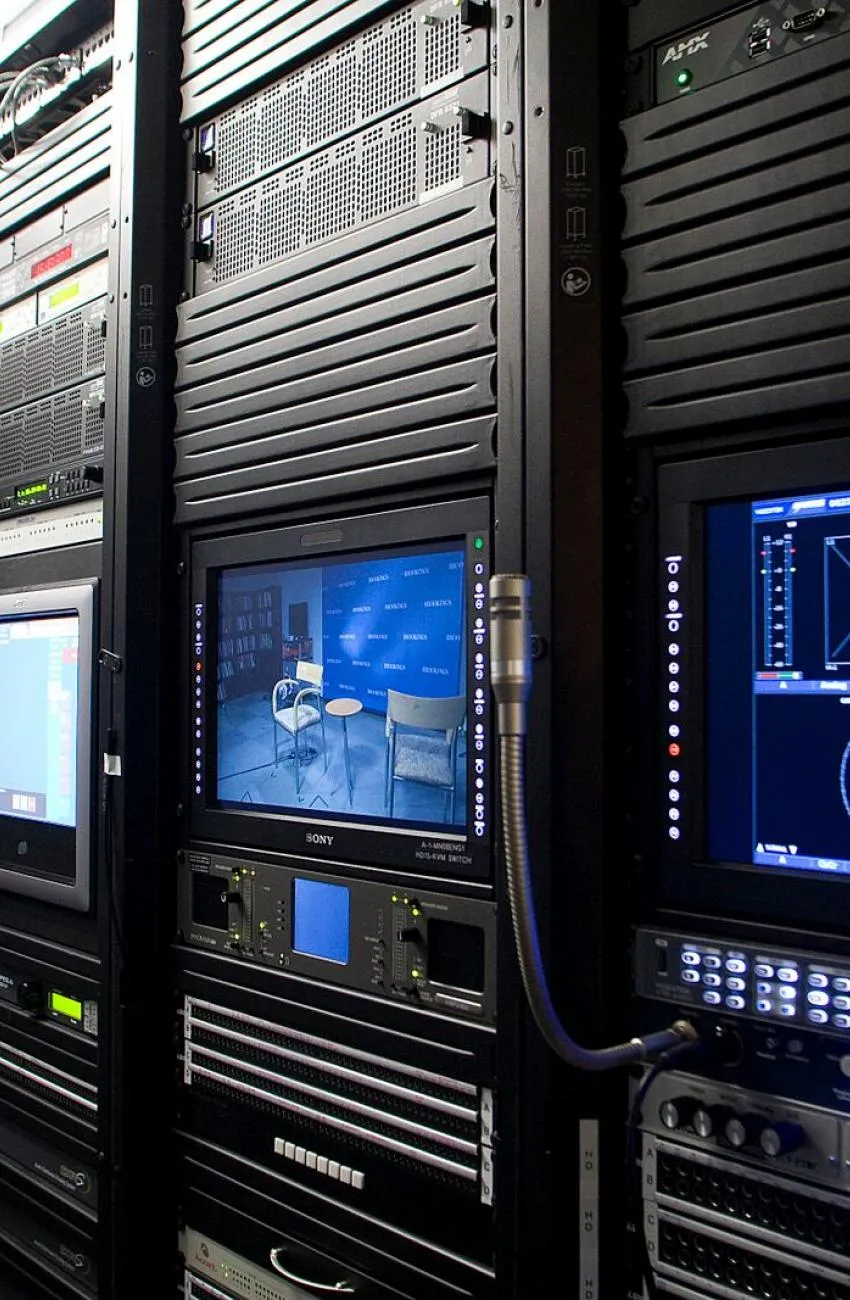 Photo: Brookings Institution, via www.lawsonarch.com
Budget Implications: Investment in the Future of Investment
The Congressional Budget Office estimates that PRACICA will cost approximately $847 million over the next ten years, though this figure only covers the cost of determining what the actual costs will be. The legislation includes provisions for additional funding as needed, with "as needed" to be determined by a specially formed Budget Determination Task Force.
"This is an investment in efficiency," argued Representative Mitchell. "Yes, it costs money to save money, and yes, it costs more money to figure out how much money it costs to save money, but that's exactly why we need this legislation. We're finally addressing the root cause of our inability to address root causes."
The Path Forward: Backward to the Future
As PRACICA moves through the legislative process – a journey that will itself require coordination with the Coordination Coordination Office – supporters express confidence that the bill represents a new era in American governance.
"Mark my words," declared Senator Blackwood during floor debate. "Future generations will look back on this moment as the day Congress finally took decisive action to eventually take decisive action. That's leadership."
The legislation is expected to receive bipartisan support, as Republicans appreciate its commitment to thorough review processes while Democrats value its emphasis on stakeholder engagement and coordination. Several lawmakers have already announced plans to introduce follow-up legislation to improve the process for implementing PRACICA, though that bill will need to be coordinated with the Coordination Coordination Office once it's established.
In the meantime, the original problem that sparked the need for process reform remains unaddressed, though officials note that addressing it is now just a matter of following the clearly defined pathway for eventually defining a pathway to address it.
As one veteran congressional staffer noted on condition of anonymity: "We may have forgotten what we were trying to fix, but we've never been more organized about forgetting it."