Washington Unites at Last: Seventeen Senators Claim Sole Credit for Renaming a Post Office That No Longer Exists
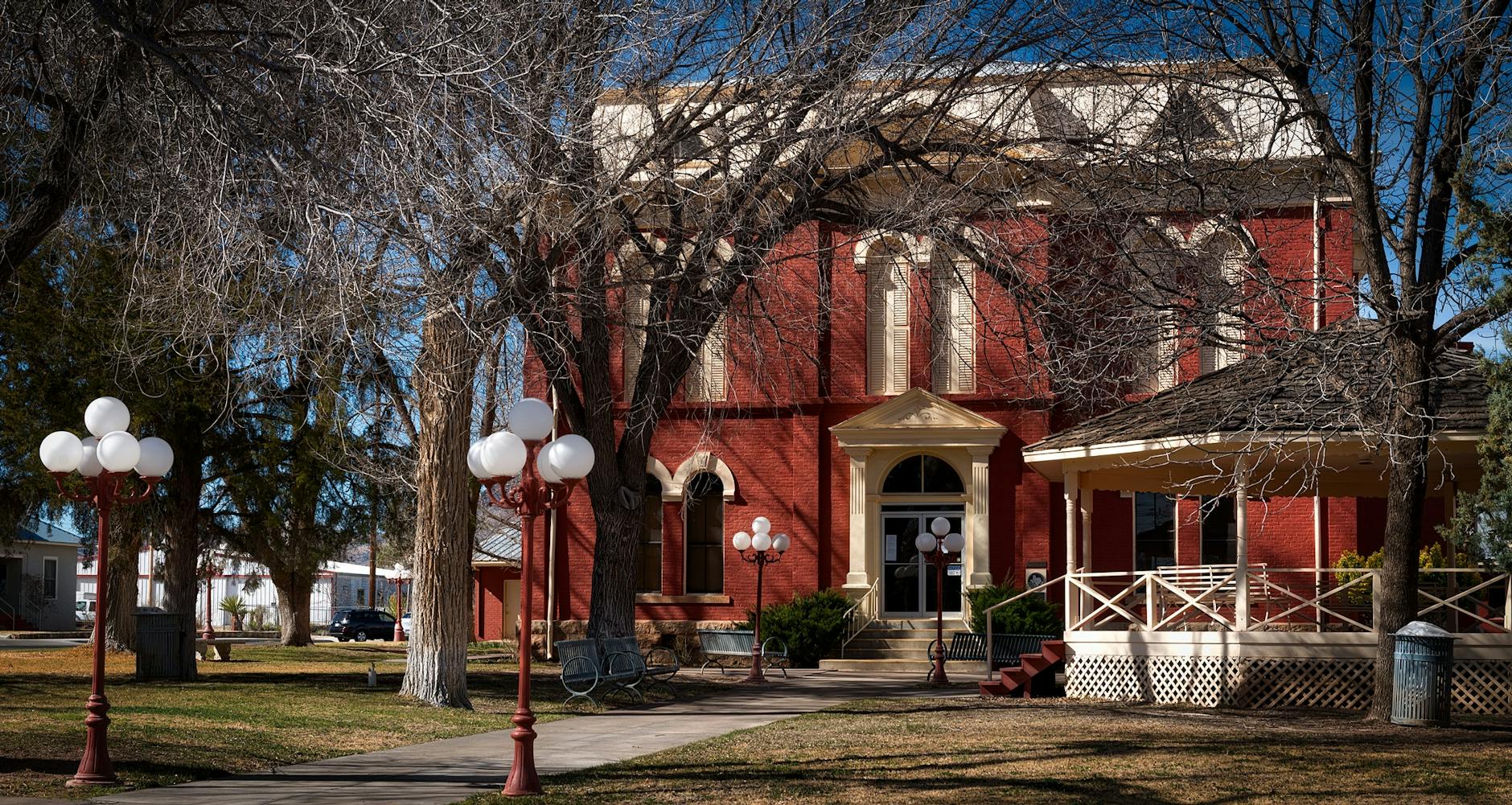
Washington Unites at Last: Seventeen Senators Claim Sole Credit for Renaming a Post Office That No Longer Exists
The Orderly Chaos | Washington, D.C.
America was given cause for optimism this week when its federal legislature, an institution that has spent the better part of a decade locked in existential disagreement over the nature of reality, came together in a moment of stunning, tearful, press-release-generating unity.
The occasion: the unanimous passage of the Harlan Dale Kowalski Memorial Post Office Designation Act, a bill renaming the post office at 412 Millbrook Road, Dunmore, Nebraska, after the late Mr. Kowalski, a 34-year veteran of the United States Postal Service who was, by all accounts, an exceptionally punctual man.
The vote was 97–0 in the Senate, 418–0 in the House. There were standing ovations. Senator Diane Prewitt of Ohio called it "a testament to what this country can accomplish when we set aside division and focus on what truly unites us." Senator Bob Callahan of Idaho described it as "democracy in action." Congressman Trevor Marsh of Pennsylvania said it made him "genuinely emotional."
The post office at 412 Millbrook Road, Dunmore, Nebraska, has been permanently closed since February 2019, when the Postal Service consolidated rural delivery routes in the region. The building is currently a feed supply storage unit leased to a local agricultural cooperative.
A Moment of National Healing
News of the vote broke on a Wednesday afternoon and was met with a volume of official communication that Washington typically reserves for declaring war or confirming Supreme Court justices.
By Thursday morning, seventeen separate Senate offices had issued press releases crediting their respective senator with being the primary architect of the Kowalski Act. Three of these releases used the phrase "years of tireless advocacy." Two described the vote as "historic." One, from the office of Senator Cynthia Marsh of Vermont — who sits on no committee with postal jurisdiction and represents a state more than 1,400 miles from Dunmore, Nebraska — called it "a personal victory for the people of this country."
Asked to clarify Senator Marsh's specific contribution to the legislation, her communications director replied that the senator had "been a consistent and vocal supporter of honoring the contributions of postal workers" and that she was "proud to have been part of this moment."
She voted yes. This is, technically, accurate.
The Expert Panel Convenes
In an effort to provide context for what political scientists are already calling "the most functional thing Congress has done since last renaming a post office," The Orderly Chaos convened a panel of three Washington policy experts to assess the significance of the vote.
Dr. Alan Forsythe, a senior fellow at the Center for Legislative Process Studies, opened by noting that post office naming bills are, in fact, among the most reliably bipartisan items on the congressional calendar, passing with near-unanimous consent dozens of times per session.
"People underestimate how hard this actually is," said Dr. Forsythe. "You have to identify a post office. You have to agree on a name. You have to agree on the spelling of the name. That's three separate consensus-building exercises. Healthcare reform, by contrast, only requires you to agree on one thing, which is what healthcare is, and we haven't managed that in sixty years. So in relative terms? This is harder."
Panelist Dr. Rachel Okonkwo, a congressional procedure specialist at Georgetown, agreed that the symbolic value of unanimous votes should not be dismissed. "The message this sends — that two parties, under enormous pressure, can still find common ground — is genuinely important," she said, before pausing. "Even if the ground in question is a locked building full of fertilizer bags in rural Nebraska."
The third panelist, a political consultant named Marcus Webb who asked not to be identified by firm, spent most of the session on his phone and at one point said, unprompted, "Look, it's a post office bill. They pass these things like parking tickets. Can we talk about the midterms?"
The panel concluded without formal recommendations.
The People of Dunmore Respond
Reaction in Dunmore, Nebraska — population 1,140, down from 1,340 in 2010 — was described by the local weekly paper, The Dunmore Courier-Gazette, as "mixed, mostly confused."
Harlan Dale Kowalski's daughter, Patricia, told the Courier-Gazette that her family was "touched and a little surprised," adding that she wished someone had let them know before it appeared on the national news. "We found out from my cousin in Omaha who saw it on Twitter," she said. "Or X. Whatever it's called now."
The agricultural cooperative currently occupying the building said it had no objection to the renaming but noted it would not be updating its signage, as the sign currently reads "AGRI-STOR UNIT 4" and changing it would require a facilities request that has been pending since 2021.
The Postmaster General's office confirmed that the renaming is legally valid and will be reflected in official USPS records, where the address will henceforth appear as the Harlan Dale Kowalski Memorial Post Office, status: closed.
The Legacy
Congress will reconvene next week to address the federal debt ceiling, the annual appropriations process, a pending farm bill, two contested judicial nominations, and a resolution about the debt ceiling that is different from the first debt ceiling thing but related to it in ways that no one has fully explained.
Senator Prewitt, asked whether the spirit of cooperation that produced the Kowalski Act might carry over into those discussions, said she was "hopeful" and that "anything is possible in this great nation."
She then walked into a waiting elevator and the doors closed.
Harlan Dale Kowalski, for the record, delivered mail in Dunmore for 34 years without missing a single scheduled route. He retired in 2011 and passed away in 2017. His daughter says he would have been pleased, mostly.
"Dad always said the post office was the one thing the government actually got right," Patricia Kowalski told the Courier-Gazette.
She has been informed of the building's current status as an agricultural storage facility.
"Yeah," she said. "That tracks."